

Visão geral
Os SDKs da Nemu foram desenvolvidos para permitir que aplicações mobile realizem o traqueamento completo da jornada de usuários, desde a origem do primeiro acesso até eventos relevantes como login, engajamento e vendas. Através das SDKs, a Nemu consegue coletar, persistir e correlacionar informações de origem e comportamento do usuário, garantindo atribuição confiável, continuidade de jornada e integração entre múltiplos ambientes (Web e App). As SDKs estão disponíveis em diferentes linguagens e plataformas mobile, respeitando as particularidades técnicas, limitações de privacidade e políticas de cada ecossistema.Objetivos do SDK
O principal objetivo do SDK da Nemu é resolver desafios comuns em ambientes mobile, como:- Perda de origem entre cliques, instalações e aberturas do aplicativo
- Dificuldade em unificar jornadas entre Web → App e App → Web
- Limitações de cookies e identificadores tradicionais em dispositivos móveis
- Restrições de privacidade impostas por sistemas operacionais e lojas de aplicativos
Principais funcionalidades
As SDKs da Nemu oferecem, entre outras, as seguintes funcionalidades:-
Criação e recuperação de sessões de jornada
Cada usuário é associado a uma sessão de tracking que representa sua jornada de navegação e conversão. -
Identificação do usuário por UID
Permite associar sessões e eventos a um identificador definido pela aplicação (ex: ID do usuário logado), possibilitando consolidação de dados entre acessos. -
Atribuição de origem de tráfego
Captura e persistência de UTMs provenientes de:- Deep links diretos
- Instalações via loja de aplicativos (install attribution)
- Deferred deep links
-
Persistência de origem entre sessões
Garante que a origem atribuída possa ser recuperada mesmo após fechar e reabrir o aplicativo. -
Integração entre Web e App
Possibilita a linkagem automática de jornadas entre ambientes Web ←→ App através do uso de UID, mantendo continuidade de atribuição.
Como o SDK se encaixa no ecossistema da Nemu
O SDK é responsável exclusivamente pela coleta e envio de dados.A aplicação de regras de negócio e modelos de atribuição ocorre na plataforma da Nemu. De forma simplificada:
- O SDK coleta informações de origem, sessão e usuário no aplicativo
- Esses dados são enviados de forma segura para a Nemu
- A plataforma da Nemu processa:
- Modelos de atribuição (Last Click, First Click, Assistido, etc.)
- Consolidação entre Web e App
- Relatórios e dashboards
O SDK não define o modelo de atribuição final. Ele garante a qualidade e integridade
dos dados necessários para que a atribuição seja aplicada corretamente na plataforma.
Resumo do funcionamento do SDK
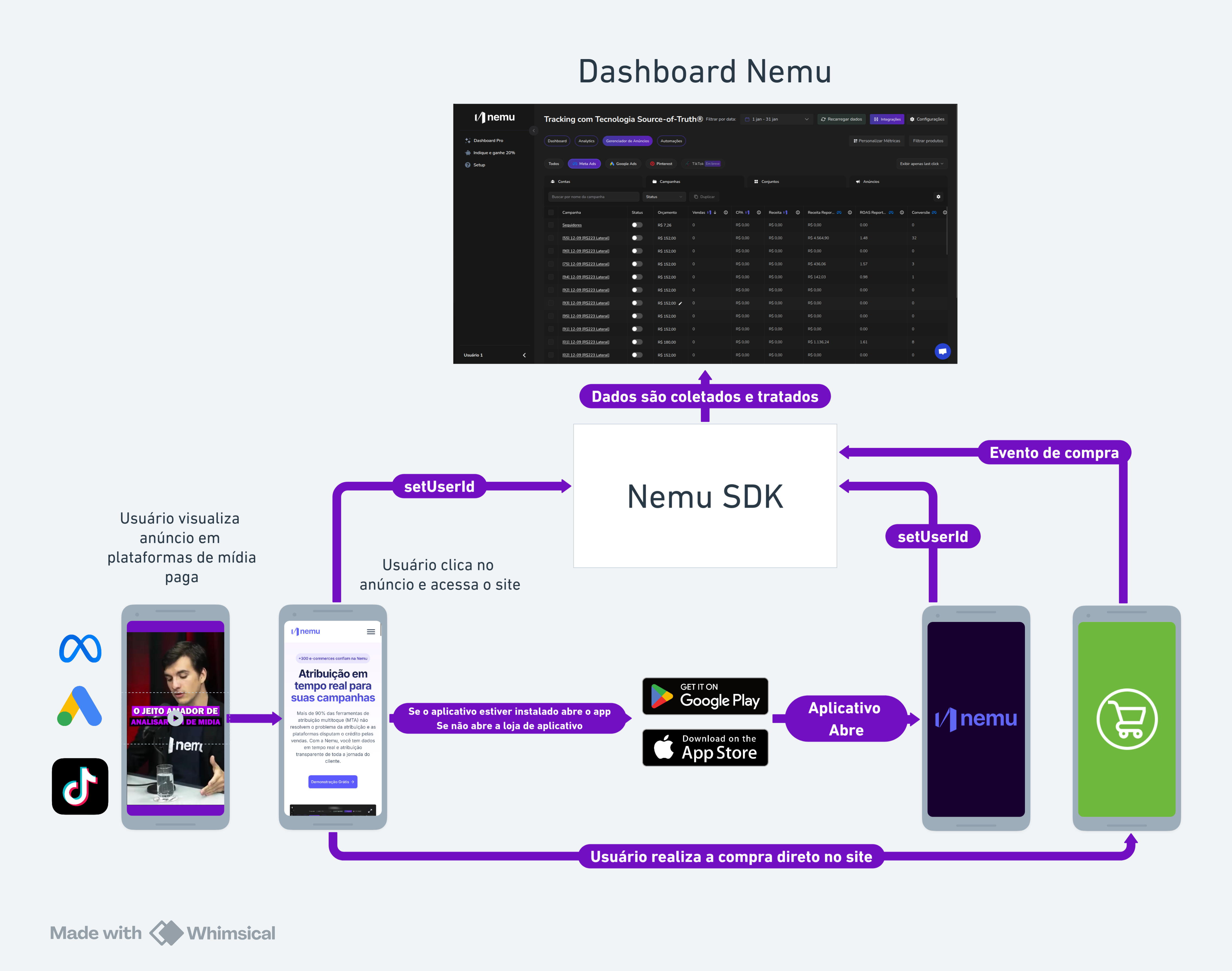
De forma resumida, o fluxo de funcionamento do SDK segue os passos abaixo:- O aplicativo inicializa o SDK
- O SDK captura a origem do usuário (deep link, instalação ou deferred deep link)
- Uma sessão de tracking é criada ou recuperada
- O UID do usuário é associado quando disponível
- As UTMs e informações de sessão ficam disponíveis para eventos e vendas
- Os dados são enviados à Nemu para processamento e atribuição
Compatibilidade e expectativas
Os SDKs da Nemu são projetados para:- Funcionar em ambientes Android e iOS
- Respeitar políticas de privacidade das plataformas
- Operar corretamente mesmo com limitações de identificadores
- Manter compatibilidade com aplicações legadas e ambientes enterprise
Próximos passos
Após compreender o funcionamento geral do sistema de SDKs da Nemu, recomendamos seguir para:- A documentação específica da SDK da sua plataforma
- As seções de configuração inicial
- Os guias de testes e validação de integração